
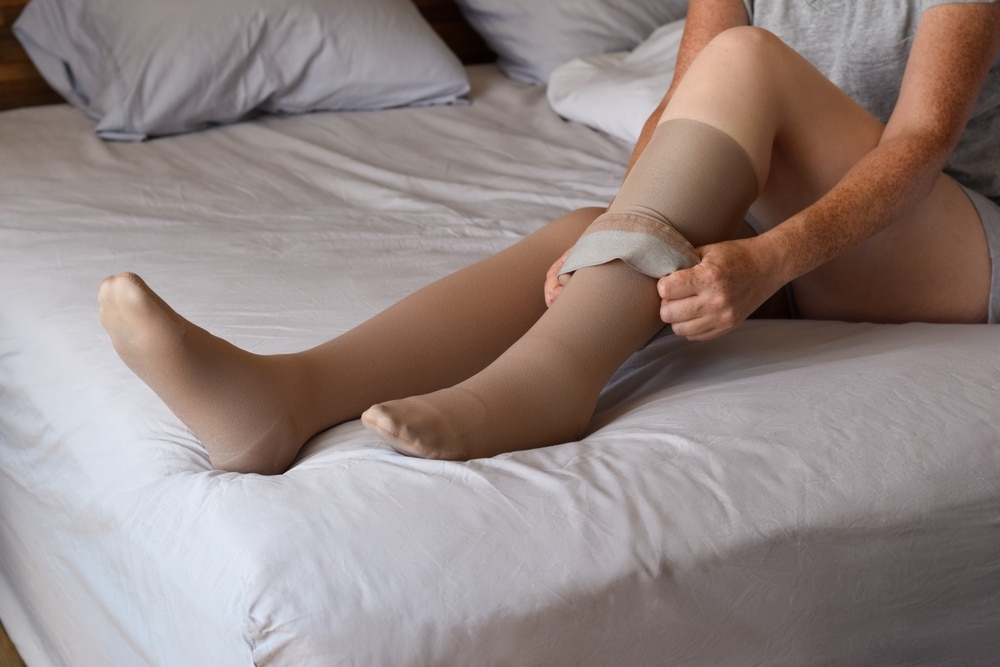
A trial of conservative therapy, ranging from 6 to 12 weeks, is often required by insurance companies before we can treat your varicose veins. At Vein Specialists of Geneva & Elk Grove, we offer the full spectrum of conservative measures in our Geneva and Elk Grove Village offices, including graduated compression stockings, exercise, periodic leg elevation, and Unna boots.
Why Is a Trial of Conservative Therapy Necessary For Varicose Vein Treatment?
Conservative therapy is an important part of the overall varicose vein removal treatment. Conservative therapy most commonly involves the usage of compression stockings. These stockings are designed to encourage blood flow to the vessels in your legs. While gradually compressing the legs, the stockings can help reduce swelling and discomfort caused by enlarged veins. By minimizing pain and allowing the veins to loosen, conservative therapy can act as a safe way to prepare for varicose vein removal.
Medical grade compression stockings are often prescribed to control the painful symptoms of varicose veins and swelling in the legs. A consultation with Dr. Kern is necessary to determine the strength of the stocking needed to control your symptoms. We keep an ample supply in stock for our patients undergoing treatment, eliminating the need for an additional stop at the pharmacy.
How Do Graduated Compression Stockings Help with Varicose Vein Management?
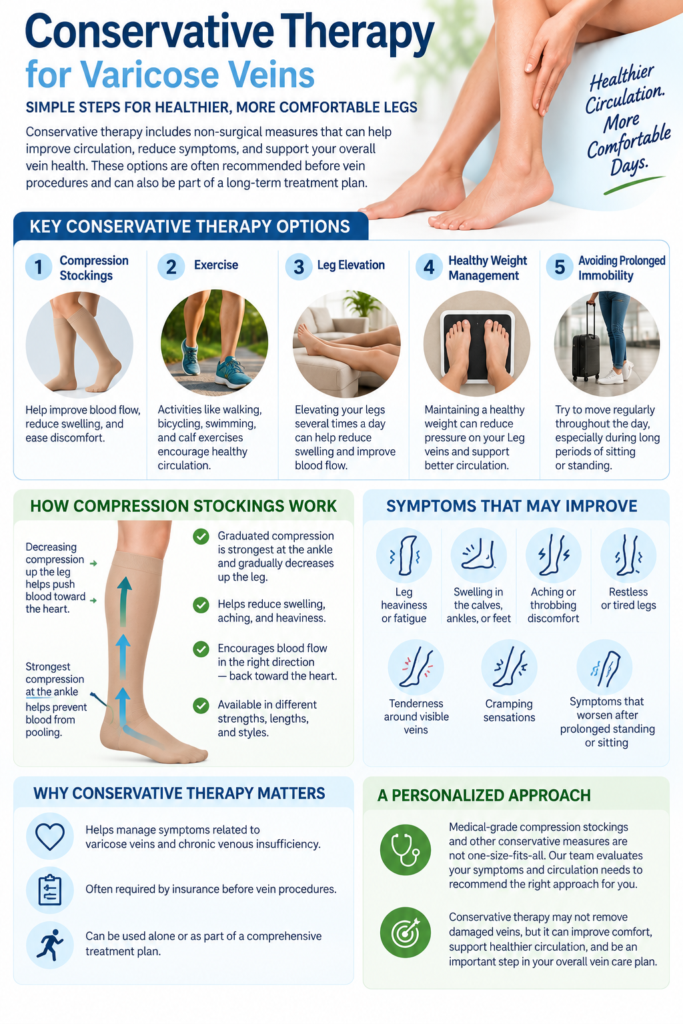
Graduated compression stockings are designed to decompress the most at the ankle. As the stocking moves up the leg, the compression level will decrease. This gradient pressure will encourage blood flow up the leg rather than down towards the foot. This compression will help squeeze varicose veins, allowing for better blood flow toward the heart.
Conservative Measures For Varicose Veins: Options
While compression stockings are the most common form of conservative therapy for varicose veins, there are a variety of conservative measures that you can use to encourage healthy blood flow to your legs despite having varicose veins. These measures include:
Exercise
Staying active is a great way to encourage blood flow to the legs and to prevent the development of varicose veins in the future. Exercises that focus on the movement of the legs, such as leg lifts, calf raises, and lunges, can be the most effective. Activities like bicycling, swimming, running, and stretching are also great ways to keep the legs moving. Balancing these activities with less intense movement, such as walking, stretching, or yoga, can help you avoid putting an extreme amount of pressure on the legs.
Periodic Leg Elevation
Keeping your legs elevated in resting positions can reduce swelling and boost circulation. Sitting in a reclining chair or using a pillow, coffee table, or ottoman is a great way to keep your legs elevated. Doing this for three to four times a day for fifteen minutes at a time will improve blood flow and prevent more varicose veins from forming.
Weight Loss
Varicose veins and blood flow issues in the legs can often be a result of obesity. Many people who are overweight suffer from leg pain or lack of blood flow in the legs. Sticking to a balanced diet and an easy-to-maintain exercise routine can help you lose weight. Once your body is more at balance, you may feel relief in your legs.
Avoiding Prolonged Immobility
Sitting or lying down for prolonged periods of time does not encourage a healthy amount of blood flow. Avoid being sedentary.
Schedule a Consultation for Varicose Vein Treatment in Geneva, IL
If you’re ready to start treatment for your varicose veins, don’t hesitate to contact Kevin P. Kern, D.O., at Vein Specialists of Geneva & Elk Grove. To schedule a consultation with Dr. Kern about how conservative measures can benefit you, click here or call 224.521.4224 to begin your journey to healthier, pain-free legs.
Symptoms That Conservative Therapy May Help Improve
Conservative therapy is commonly recommended for patients experiencing symptoms related to chronic venous insufficiency and varicose veins. While these measures do not remove damaged veins, they may help improve circulation and reduce daily discomfort associated with vein disease.
Many patients seek conservative treatment because they experience symptoms such as:
- Leg heaviness or fatigue
- Swelling in the calves, ankles, or feet
- Aching or throbbing discomfort
- Restless or tired legs later in the day
- Tenderness surrounding varicose veins
- Cramping sensations in the lower legs
- Symptoms that worsen after prolonged standing or sitting
Compression therapy and healthy circulation habits may help reduce pressure inside the veins and support more comfortable movement throughout the day. Patients often notice that symptoms become more manageable when conservative measures are followed consistently as part of their daily routine.
For many individuals, conservative therapy also serves as an important first step in understanding how circulation issues are affecting their overall leg health. Symptoms that may initially seem minor can gradually progress over time if underlying venous insufficiency is left untreated.
Personalized Compression Therapy Matters
Medical-grade compression stockings are not one-size-fits-all. Compression therapy is available in several strengths, lengths, and styles depending on the severity of vein disease and the patient’s symptoms.
At Vein Specialists of Geneva & Elk Grove, our team carefully evaluates each patient’s circulation concerns before recommending compression therapy. This personalized approach helps ensure patients receive the appropriate amount of support while maintaining comfort during daily activities.
Proper fit is especially important for effective treatment. Compression stockings that are too loose may not provide sufficient support for healthy circulation, while those that are too tight may be difficult to wear consistently. Patients are often more successful with conservative therapy when their compression garments are selected specifically for their individual needs.
We also help educate our patients on how and when to wear compression stockings, how to care for them properly, and how conservative therapy fits into a larger vein treatment plan.
Conservative Therapy May Be Only One Part of Treatment
Although conservative therapy can help manage symptoms associated with varicose veins and chronic venous insufficiency, it may not fully correct the underlying circulation problem responsible for vein disease. Damaged vein valves generally do not repair themselves over time.
Some patients experience meaningful symptom relief with compression therapy, exercise, leg elevation, and lifestyle changes alone. Others may continue to experience swelling, visible varicose veins, leg discomfort, or circulation problems despite consistent conservative care.
When symptoms persist, minimally invasive vein procedures may be recommended to directly address malfunctioning veins that contribute to poor circulation. Modern vein treatments are designed to improve blood flow while minimizing downtime and discomfort compared to older surgical approaches.
At Vein Specialists of Geneva & Elk Grove, Dr. Kern creates individualized treatment plans based on ultrasound findings, symptom severity, circulation concerns, and each patient’s goals. Because vein disease affects every patient differently, treatment recommendations are carefully tailored rather than relying on a one-size-fits-all approach.
By combining conservative therapy with advanced vein care when appropriate, patients may achieve improved comfort, healthier circulation, and better long-term management of vein disease symptoms.